


Three Things Stretch Fabric Does Not Like
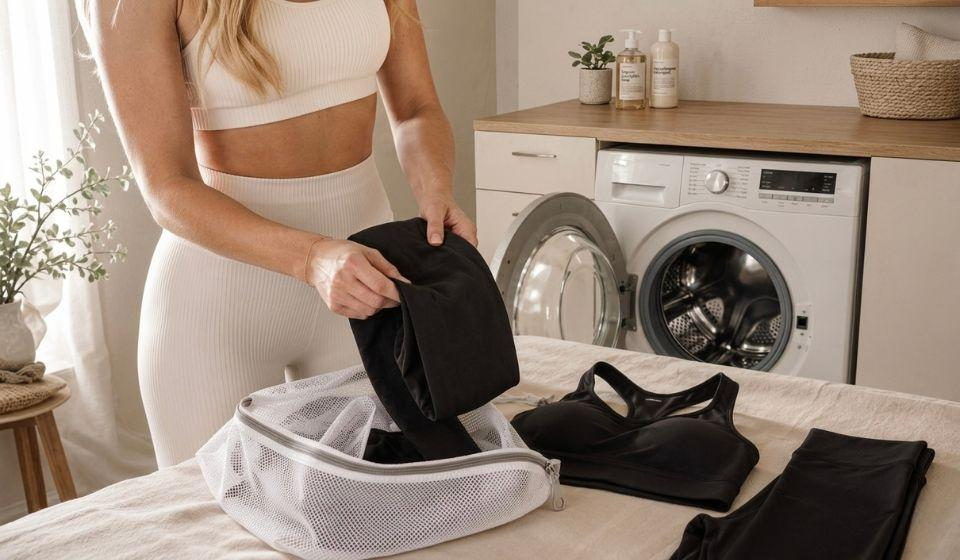
Most of what shortens the life of stretch fabric happens in the laundry room, not in the gym.
Activewear behaves differently from the rest of a wardrobe because of one ingredient. Elastane, sold under names like spandex and Lycra, is the fiber that lets a knit stretch in every direction and then return to shape. It is usually a small percentage of the fabric, and it is the part that fails first. When leggings go slack at the knee or a bra band stops holding, the elastane is what gave up.
The useful thing about that is how specific its enemies are. There are three of them, and all three are easy to avoid once you know what they are.
1. Heat
Elastane is a rubber-like fiber, and heat relaxes it permanently. A hot wash does some of the damage, but a tumble dryer does far more, because the fabric sits at high temperature while being flexed over and over. That combination is what turns a snug waistband into a loose one in a handful of cycles.
Wash cool, on the cold setting, and let pieces air dry. Hang them over a rail rather than pegging them by one corner, since a wet knit is heavy and a single pinch point stretches out. Radiators and direct sun are the same problem as a dryer in slower form, so keep them off both.
2. Oils, Softeners, and Sunscreen
Fabric softener works by coating fibers in a thin waxy film. On a cotton towel that feels pleasant. On a technical knit it fills the spaces the fabric relies on to move air and to release moisture, and the coating builds up rather than rinsing away. The same goes for dryer sheets.
Sunscreen and body lotion do a similar thing from the other direction. Both are oil-based, both transfer onto the fabric at the waistband and under the band of a bra, and both hold onto odor once they are in there. It is worth letting sunscreen absorb for a few minutes before getting dressed, and worth washing pieces with a plain detergent that has no softener built in.
If something already smells even after washing, soak it for half an hour in cool water with a cup of white vinegar, then wash as normal. That cuts through built-up residue without attacking the fiber.
3. Sitting Damp and Compressed
The third one is the most common and the least dramatic. A damp pair of leggings rolled into a bag and left there overnight spends eight hours in a warm, airless, compressed state. That is where odor sets in for good, and it is also where hard creases get pressed into a knit that then has to be worked back out.
Take them out of the bag when you get in, even if the wash is not happening until tomorrow. Hang them somewhere with moving air. If they are going straight into a laundry basket, put them on top rather than at the bottom under a week of towels.
What a Simple Routine Looks Like
Turn pieces inside out so the side that touched skin faces the water. Use a mesh bag if you have one, mostly to stop hooks and zips on other garments catching the knit. Cool wash, plain detergent, no softener, no dryer. That is the whole thing, and it is the difference between a pair that lasts a season and one that lasts several.
Sizing, fabric weight, and how each piece is meant to sit are covered on our FAQs if you are deciding what to buy in the first place.
Thank you for shopping with us, and for keeping the routine going.