


What Activewear Labels Actually Mean
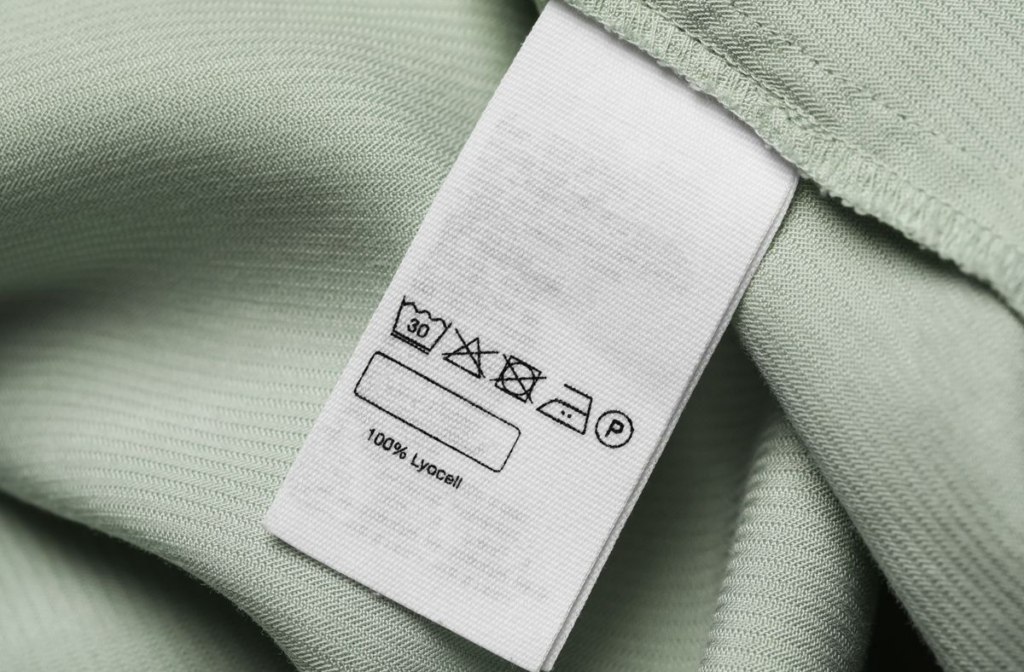
Half the words on an activewear label describe construction, not fiber.
Activewear listings carry a vocabulary that sounds technical and is rarely explained. Some of the words describe the fiber, some describe how the fabric is knitted, and some describe how the garment is sewn together. Knowing which is which makes a listing much easier to read.
Four-Way Stretch
The fabric stretches along its length and across its width, and recovers in both directions. Two-way stretch moves in one direction only. For anything that gets squatted in, four-way is the one that matters, because a knee bend pulls the fabric lengthwise and a hip hinge pulls it across at the same time.
Recovery
Stretch is how far a fabric goes. Recovery is whether it comes back. They are separate properties and only one of them is usually advertised. A fabric with plenty of stretch and poor recovery is the one that bags at the knee by the afternoon. Recovery comes mostly from the elastane content and from how the knit is built, which is why two fabrics with the same fiber percentage can behave differently.
Compression
A description of how firmly the fabric holds against the body, not a claim about what that does. Light compression feels like a second skin. Firm compression is noticeably tight when putting the piece on and stays present through wear. It is a preference rather than a ranking, and it is worth knowing which you like before ordering, because the same size in the two feels like a size apart.
Brushed and Peached
Both refer to a finishing process applied to the inside surface of the fabric. Brushing raises a soft nap, which is why a brushed legging feels warm and slightly matte. Peaching is a lighter version of the same idea. Neither changes the stretch, and both add a little weight and opacity.
Moisture-Wicking
The fabric moves liquid from the inner surface to the outer one, where it spreads out and evaporates. It is a property of synthetic fibers such as polyester and nylon, and of the knit structure. Cotton does the opposite: it absorbs and holds. That is the practical reason most activewear is a synthetic blend rather than cotton.
GSM and Denier
GSM is grams per square meter, a measure of fabric weight. A higher number means a denser, heavier, generally more opaque fabric. Denier measures the thickness of the individual yarn. Between the two, GSM is the more useful figure to compare when you are trying to work out whether a legging will be see-through.
Gusset, Flatlock, and Overlock
These describe construction rather than fabric. A gusset is an extra panel of fabric at the crotch, usually diamond or triangle shaped, which spreads the load away from a single seam junction. A flatlock seam lies level with the fabric around it, so it does not press into skin. An overlock seam stands slightly proud and is more likely to be felt under a waistband or a strap.
Reading a Listing Quickly
The three things worth checking first are fiber percentage, whether the stretch is described as four-way, and the fabric weight. Those three together tell you more about how a piece will behave than any adjective. Everything else is comfort detail, and comfort detail is personal.
Where a fabric sits lighter or firmer than its numbers suggest, we say so in the size information. What arrives, how quickly, and what it costs to send back are on our Shipping Policy.
Thank you for shopping with us, and for keeping the routine going.